


Mawawil
Mawawil
Performance Preview
Biography
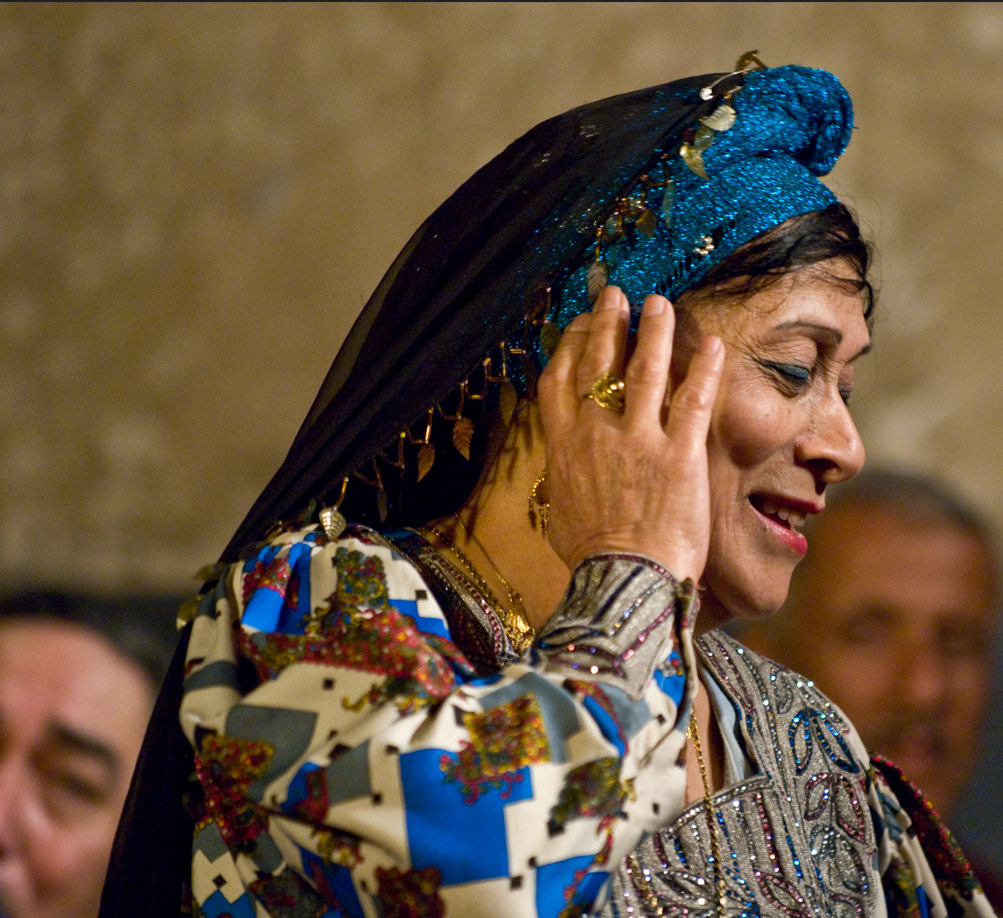
provinces in the Egyptian Delta, to form the group Mawawil. These performers play a wide repertoire of the traditional music of the Egyptian countryside, performed and enjoyed over decades by the peasant population, as well as by emigrants from the countryside to urban centres. The music reflects the daily life of peasants though love songs, religious songs (stories of the Prophets, praise of the Prophet Mohammed), poetic texts, and the king of popular songs, the mawwal or narrative ballad.
The mawwal has links to historical forms of Arabic song and poetry, and the singer demonstrates his skill with non-metrical melodic improvisation on a poetic narrative text and melody, adding or substituting his own phrases to the words of a poet. In Egypt, the text features end-rhyme schemes, such as aaabba which cleverly use punning and play on words to present different meanings for the same phonemes:
alhan shababik – intertwining tunes;
fatahu l- shababik – they opened the windows;
gharami shaba bik – my love for you has come into its full flower.
The musicians of Mawawil play the rababa, which is a double-stringed spike fiddle made from half of a coconut shell covered with fish skin and a bow strung with horse hair, the kawala, an end-blown, oblique flute with six holes and the arghoul, which is an ancient double clarinet characterized by two pipes of unequal length. The second pipe serves as a drone and can be lengthened by adding pieces. The player uses the technique of circular breathing to produce an uninterrupted sound.
The mawwal has links to historical forms of Arabic song and poetry, and the singer demonstrates his skill with non-metrical melodic improvisation on a poetic narrative text and melody, adding or substituting his own phrases to the words of a poet. In Egypt, the text features end-rhyme schemes, such as aaabba which cleverly use punning and play on words to present different meanings for the same phonemes:
alhan shababik – intertwining tunes;
fatahu l- shababik – they opened the windows;
gharami shaba bik – my love for you has come into its full flower.
The musicians of Mawawil play the rababa, which is a double-stringed spike fiddle made from half of a coconut shell covered with fish skin and a bow strung with horse hair, the kawala, an end-blown, oblique flute with six holes and the arghoul, which is an ancient double clarinet characterized by two pipes of unequal length. The second pipe serves as a drone and can be lengthened by adding pieces. The player uses the technique of circular breathing to produce an uninterrupted sound.